In today’s fast-moving digital economy, keeping up with state tax laws is essential to keeping your business running smoothly. As October begins, finance leaders and software companies selling into California face an urgent compliance task. Signed into law on June 29, 2026, California Senate Bill 122 expands the state’s sales and use tax base to include prewritten software, electronic downloads, and remotely accessed Software-as-a-Service (SaaS). With an effective date of January 1, 2027, companies have a narrow window during the final months of 2026 to update billing systems, review customer contracts, and prepare for tax collection. In this blog, we will explore what Senate Bill 122 means for your business, key operational challenges, the consequences of non-compliance, and how preparing in Q4 prevents costly surprises.
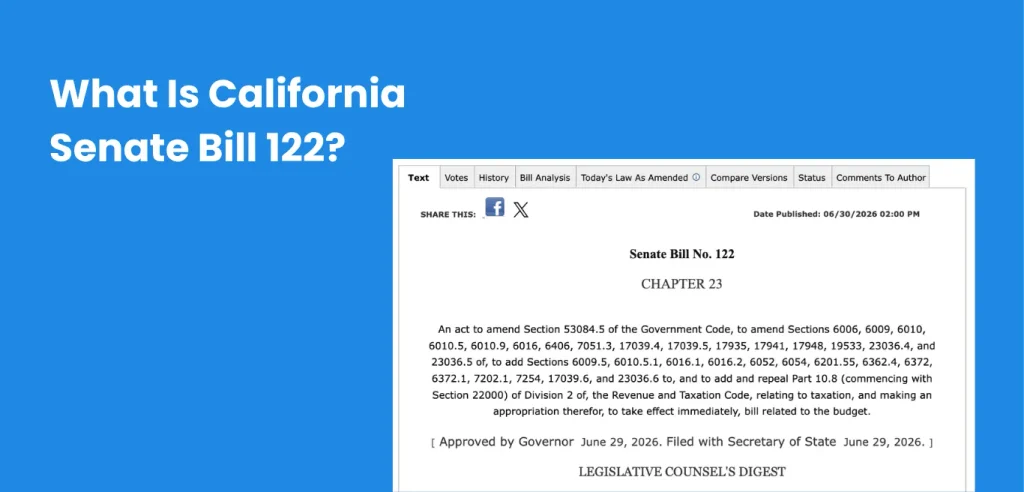
What Is California Senate Bill 122?
Historically, California was one of the few major states that exempted custom and prewritten software delivered electronically from sales tax, taxing software only when delivered on physical media like discs or flash drives. Senate Bill 122 changes this rule. Starting January 1, 2027, California will join the majority of states that tax digital products, software downloads, and cloud-hosted SaaS platforms. Under the updated law, any company selling prewritten software or cloud software subscriptions to customers in California must register, calculate, collect, and remit state and local sales tax based on the buyer’s location.
Key Changes Under the New Law
Understanding the scope of Senate Bill 122 requires evaluating how software products are classified under the updated tax code:
Remotely Accessed Software-as-a-Service (SaaS): Cloud-hosted platforms, web applications, and software subscriptions accessed online will be fully subject to California sales tax, regardless of where server infrastructure is located.
Electronic Downloads: Prewritten software, digital updates, and mobile applications delivered digitally will lose their tax-exempt status and become taxable.
Prewritten vs. Custom Software: While custom software built specifically for a single client remains under specific exempt definitions, standard prewritten software sold to multiple clients falls directly into the taxable base.
Essential Q4 Steps to Prepare for January 1, 2027
With the law taking effect on January 1, 2027, finance teams must complete several critical updates during Q4:
Audit Your California Customer Base: Review active customer ledgers to identify all accounts with primary or secondary locations in California. Accurate address data is vital for applying correct local tax rates across California’s municipal jurisdictions.
Update Billing Systems and ERP Software: Ensure your enterprise resource planning (ERP) systems, subscription billing tools, and checkout systems are configured to calculate California sales tax starting January 1, 2027.
Review Multi-Year Customer Contracts: Analyze active customer agreements that extend past January 1, 2027. Contracts should clearly state whether sales tax is included in the base price or will be added as a separate line item on recurring invoices.
Integrate Automated Sales Tax Software: Manually managing local tax variations across California’s city and district rates is inefficient and prone to errors. Connecting specialized tax tools like Avalara or TaxJar to your accounting system ensures accurate automated calculations.
Consequences of Non-Compliance
1. Uncollected Taxes Paid From Operating Margins
If a company fails to collect sales tax from California customers starting January 1, 2027, state authorities hold the seller liable for the uncollected balance. Because the tax was not collected at checkout, the outstanding bill comes directly out of your business profits.
2. Statutory Interest and Audit Penalties
The California Department of Tax and Fee Administration (CDTFA) enforces strict compliance rules. Failing to register, file returns, or remit collected taxes on time leads to statutory interest charges and heavy failure-to-file penalties.
3. Disagreements and Customer Friction
Retroactively billing corporate clients for uncollected sales tax months after a purchase creates friction and damages customer relationships. Setting up proper billing systems in Q4 prevents these difficult client conversations.
Final Thoughts
Expanding California’s sales tax base under Senate Bill 122 marks a major shift for software providers and corporate buyers. Waiting until late December to adjust billing platforms or review contracts creates unnecessary financial risk and operational stress. By auditing your client base and updating accounting systems during October, your business can maintain full compliance, protect operating margins, and enter the new fiscal year with confidence.
MontPac’s Recommendation
At MontPac, we understand the operational strain state tax changes place on growing businesses. We recommend that software companies evaluate their sales tax configuration during October to ensure readiness for the January 1, 2027 effective date. With extensive experience in multi-jurisdiction reporting, cloud accounting integrations, and corporate tax compliance, our team helps organizations build audit-ready, scalable financial operations. Reach out to MontPac today to schedule a strategic consultation.
Frequently Asked Questions
When does California Senate Bill 122 take effect? The law takes effect on January 1, 2027. All qualified SaaS subscriptions, digital downloads, and prewritten software sales delivered to California buyers on or after this date will be subject to state and local sales tax.
Does Senate Bill 122 apply to out-of-state software sellers? Yes. Out-of-state companies that meet California’s economic nexus threshold (typically $500,000 in annual sales into the state) must register with the CDTFA and collect sales tax on sales to California buyers.
How are multi-state corporate software licenses taxed? If you sell software or SaaS subscriptions to a company with users across multiple states, sales tax is generally allocated based on where the software is accessed or used. Proper documentation and multi-location invoicing are essential.
Are custom software development services taxable under Senate Bill 122? Custom software developed exclusively to the unique specifications of a single buyer generally retains its exempt status, provided contracts and invoices clearly distinguish custom development from prewritten modules.
If your business provides software, SaaS platforms, or digital downloads to customers in California, preparing for Senate Bill 122 in October is a vital step toward a smooth year-end transition.
Why Is an October Compliance Audit Essential?
Taking early control of your sales tax setup prior to January provides key operational benefits:
Ample time to reconfigure subscription billing engines and test tax calculations before the new year begins.
Opportunity to inform California corporate clients in advance about tax line items on upcoming recurring invoices.
Clear distinction between taxable prewritten software and non-taxable professional service components.
Reduced administrative workload for your internal accounting team during the busy December closing period.
How MontPac Simplifies Tax Compliance
Navigating state tax changes requires technical tools, clean general ledgers, and consistent execution. MontPac supports your company through every stage of the compliance process:
Nexus and Revenue Audits: We analyze client ledgers to identify California sales volume and determine tax registration requirements.
Software Integration: We help connect automated tax engines to your cloud accounting and billing platforms for seamless rate calculations.
Contract and Ledger Clean-Up: We review recurring revenue contracts to ensure sales tax billing language is clear and compliant.
Ongoing Sales Tax Filing: We manage monthly and quarterly state filings, ensuring accurate tax remittal to state and local authorities.
By establishing strong tax workflows in October, your business can avoid costly back-tax liabilities, maintain strong client relationships, and approach the new fiscal year with complete confidence.
Comments are closed
About
Montgomery Pacific Corporation (MontPac) is the foremost outsource accounting and CFO Advisory firm for the past 20 years. Whether you are a startup, hypergrowth company or venture fund, we provide a complete set of back-office services so you can focus on growing your organization. We are your strategic partner at every stage and collaborate with you and your team on your vision.